The Archive does not usually acknowledge material it did not itself recover. This file is an exception. It concerns a bound volume that surfaced through channels entirely outside our own — a commercial publication, sold openly, cataloguing residential housing across ten cities the Archive had never formally cross-referenced against each other.
What the volume documents is not new to us. What is new is the confirmation that somebody else was keeping the same kind of records, in the open, without knowing we existed.
Ten cities. One architecture. Nobody agreed to build it twice, and everybody did.
The Publication
The book runs to 248 pages, hardcover, organized as ten city chapters rather than a single continuous survey: Chișinău, Kaliningrad, Lviv, Minsk, Prague, Riga, Sofia, Tallinn, Tbilisi, and Vilnius. Over 180 photographs, each one a documentary record of a housing block — not a monument, not a ministry, just the buildings people were assigned to live in.
It was assembled by two documentarians working under a small publishing imprint, with an introductory essay contributed by a historian of the region's postwar housing programs. None of that biographical detail matters as much as the fact that the work exists at all, compiled with no apparent knowledge of this Archive's own findings, and arriving at the same conclusion regardless.
What the Archive Recognizes
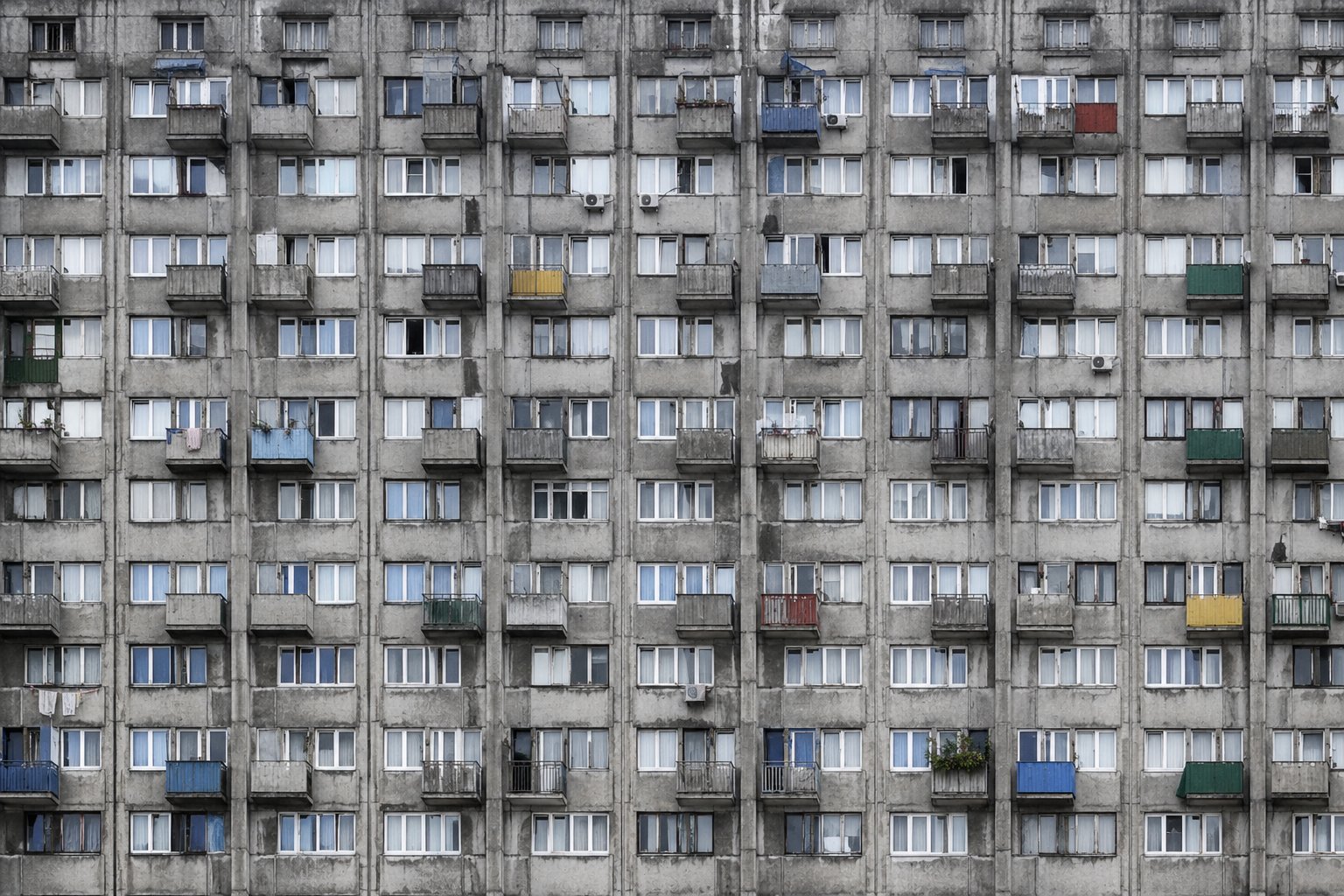
The balconies are the tell. Identical concrete units, individualized one at a time — a sheet of blue corrugate here, a hand-painted rail there, a line of washing strung between two apartments that were never designed to know each other. Ten cities, ten separate administrations, and the residents solved the same problem — how to make a standardized cell feel occupied — in the same handful of ways, independently, without conferring.
This is the pattern the Archive has always argued was not aesthetic but administrative: a design language that recurs wherever a bureaucracy needs to house a population fast, cheaply, and at scale, regardless of which flag happens to be flying above it that decade.
What the Archive Cannot Explain
No shared architect connects these ten cities. No single directive. And yet the volume reads like ten field offices independently filing the same report. The Archive has no citation for why that should be true, only the observation that it keeps being true, everywhere concrete housing was built in a hurry.
We are filing this publication as corroborating documentation — not proof of the parallel record this Archive maintains, but evidence that the pattern it describes was never confined to it.