In the winter of 1945, much of Europe was rubble. Not metaphorically. Literally. Dresden, Warsaw, Rotterdam, Coventry, Hamburg — cities that had existed for centuries reduced in hours to stone and ash. Somewhere between thirty and forty million people had been displaced. They needed somewhere to live. They needed it immediately.
What followed was the largest coordinated housing programme in human history. Governments across Europe — and across the ideological divide that was already hardening into the Cold War — reached the same conclusion by different routes: the answer was concrete, and the answer had to be collective.
This is the origin of the buildings we are discussing. Not aesthetic experiment. Not architectural theory. Desperate necessity, met with the most ambitious social engineering the modern world had ever attempted.
The largest coordinated housing programme in human history. Built from necessity, not theory.
The British Experiment
Britain emerged from the Second World War victorious and exhausted. The country that had held out alone against fascism in 1940 was, by 1945, effectively bankrupt. The Empire was dissolving. The cities were bombed. And the population, having been promised something better in exchange for everything they had endured, was not prepared to return to the slums of the 1930s.
The postwar Labour government understood this as a moral obligation. The welfare state — the National Health Service, social housing, the whole architecture of collective provision — was not a political strategy. It was a debt. You do not ask people to die for their country and then send them home to damp rooms and shared toilets.
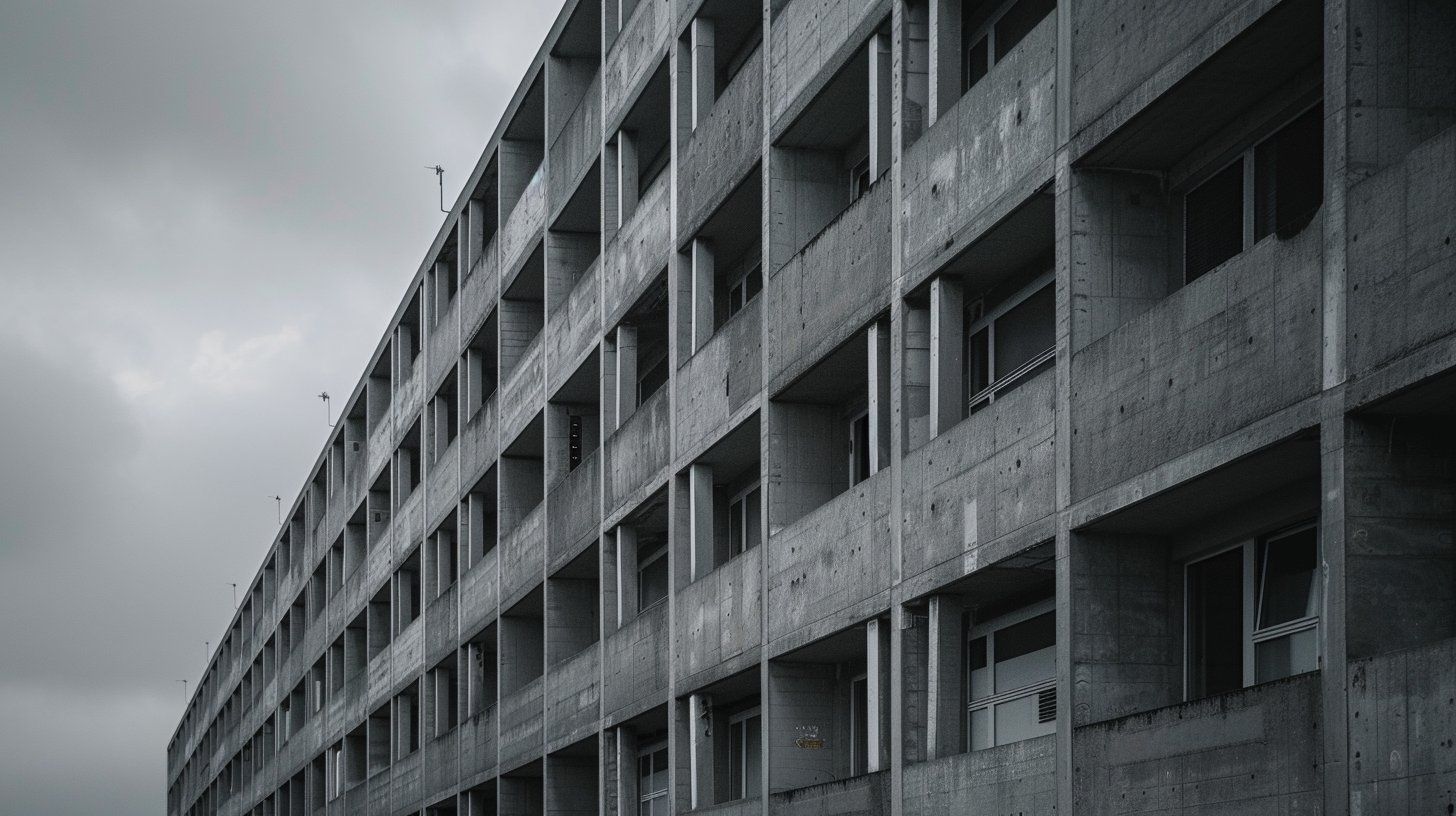
The housing blocks that went up across Britain in the late 1940s, 1950s, and 1960s were built in this spirit. Park Hill in Sheffield. The Barbican in London. The Robin Hood Gardens. They were designed by people who genuinely believed that good design — light, space, community, dignity — could change lives. That the physical environment shaped the human beings who lived in it. That the poor deserved the same quality of space as the wealthy.
The Eastern Bloc
On the other side of the Iron Curtain, the same impulse produced different buildings from different premises. The Soviet panel-built housing block — the Khrushchevka, named for the leader who ordered millions of them constructed in the late 1950s — was not interested in architectural distinction. It was interested in speed and scale.
Nikita Khrushchev was explicit about this in a famous 1954 speech denouncing architectural excess. The ornamental Stalinist architecture of the postwar years — the wedding-cake skyscrapers, the neoclassical facades — was, in his view, a waste of resources that could have housed more people. The new Soviet architecture would be functional, standardised, and fast.
What followed was extraordinary in scale. Between 1955 and 1985, the Soviet Union built enough housing to accommodate a significant portion of its urban population. The Plattenbau housing estates of East Germany. The panel blocks of Poland, Czechoslovakia, Romania, Hungary. Stretching to the horizon. Identical. Relentless. And, by any objective measure, a genuine improvement in living conditions for millions of people who had previously lived in overcrowded pre-revolutionary housing without running water or central heating.
By any objective measure, a genuine improvement for millions who had nothing before.
The Collapse of the Dream
The British housing blocks failed for reasons that had nothing to do with their design and everything to do with political decisions made after they were built. The social infrastructure they assumed — caretakers, maintenance budgets, community services — was systematically defunded. The lifts broke. The walkways were not cleaned. The communal spaces that were supposed to generate community were left to decay.
Then the buildings were blamed for the consequences of their own neglect. This was, and remains, a remarkable piece of political misdirection. The Ronan Point collapse in 1968, the association of tower blocks with crime and poverty — none of these were architectural failures. They were policy failures dressed up as design failures.
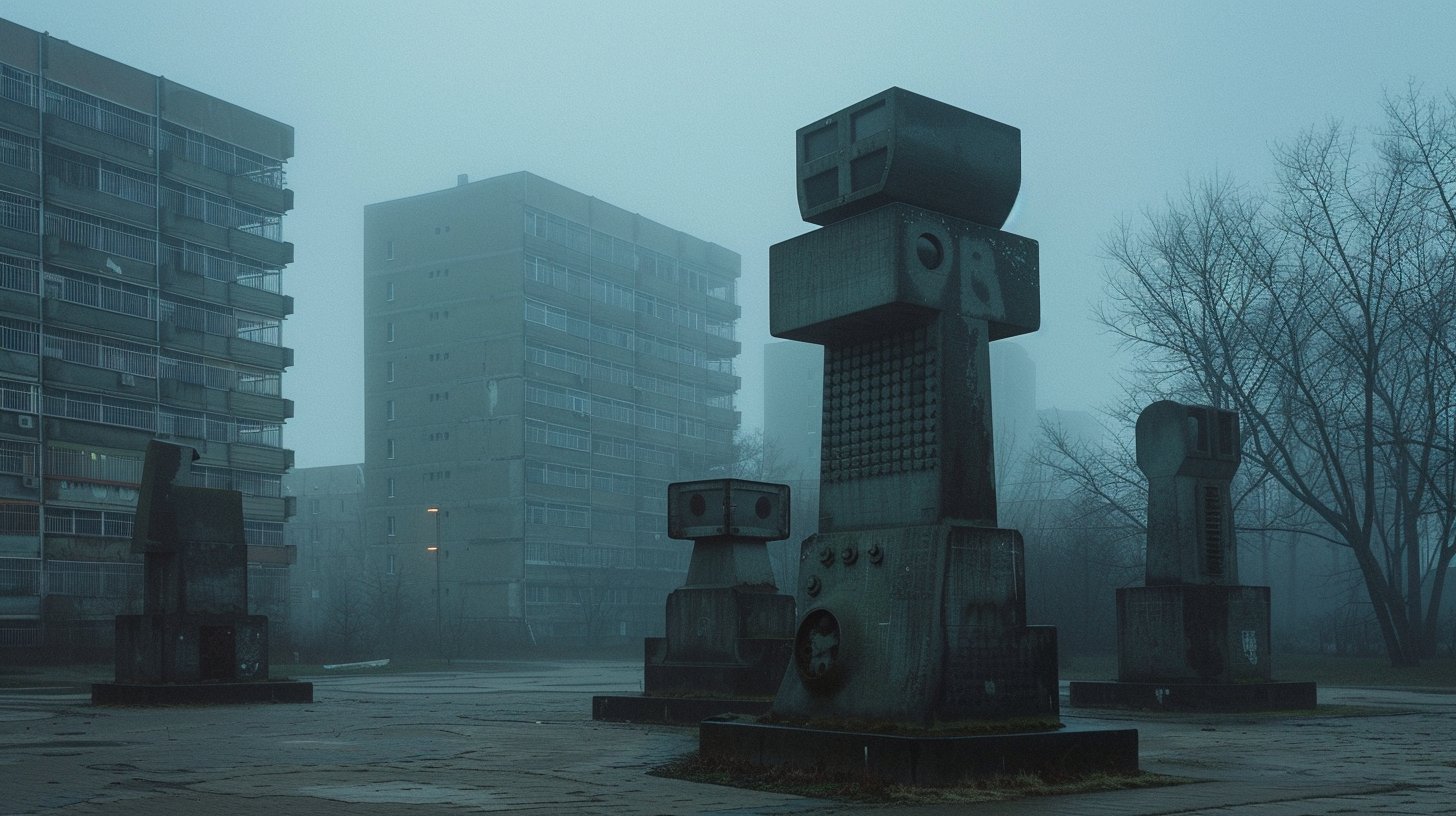
In Eastern Europe, the collapse was different and more total. The ideology that had built the housing blocks was delegitimised overnight. The buildings remained. Their residents, many of whom had spent their entire lives in panel-block apartments, now lived in structures that the new political order associated with everything it wanted to forget.
What We Owe Them
The people who built these housing blocks were wrong about some things. They underestimated the importance of human scale, of streets that felt like streets, of the difference between a neighbourhood and a development. They believed too much in the power of design to solve problems that were fundamentally social and economic.
But they were right about the ambition. The idea that every person — regardless of income, class, or the accident of birth — deserved to live somewhere with light and space and running water and central heating is not a failed idea. It is an idea that was implemented imperfectly and then abandoned before it could be corrected.
The buildings that remain carry this history in their concrete. They are not monuments to failure. They are monuments to the distance between what was promised and what was delivered — and to the people who lived their whole lives in that gap.
That distance is not the buildings' fault. It never was.