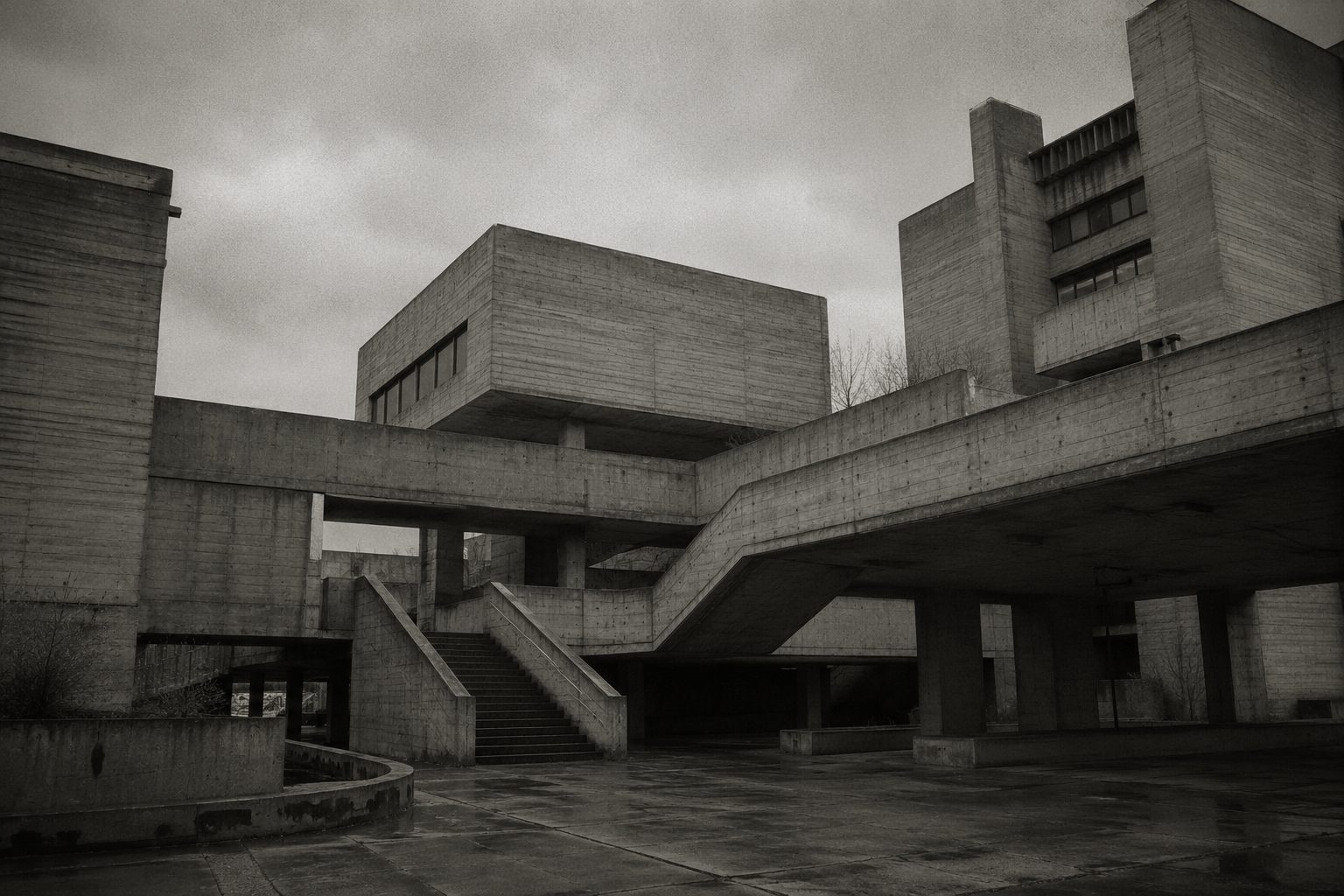
The file does not explain itself. It does not need to. On the tenth of February, an unnamed cultural authority appended a single new designation to a structure it had refused, six times, across thirty-five years, to name at all.
The building had not changed. The concrete had not softened. What had changed was the willingness of the state to say, in writing, that it approved.
The word wrong appears nowhere in the record. The word listed appears once, and settles the matter.
The Standing Refusal
For thirty-five years the appropriate response to this structure was rejection — recorded, filed, repeated. Six recommendations for protection were submitted. Six were declined. No reason accompanies a sixth refusal that did not already accompany the first; the file simply closes and reopens, closes and reopens, until one year it does not close.
This is not a story about a building's rehabilitation. Buildings do not rehabilitate. They stand. What moves is the apparatus around them — the committees, the departments, the ministers who sign or decline to sign — and what that apparatus produces, eventually, is not an admission but a reclassification.
Two Positions, Both Filed as True
Consider what the reversal requires the state to hold simultaneously: that the structure was, for thirty-five years, correctly deemed unworthy of protection — and that it is now, without transition, correctly deemed essential to protect. Both positions are filed as true. Neither is reconciled. This is not hypocrisy. This is how an institution changes its mind without ever having one to change.
The undercroft is of particular interest. For years it was occupied — without permission, without designation, by those who used the raw concrete for exactly what raw concrete is for. The state did not list the undercroft because it valued what happened there. It listed the undercroft because enough people insisted, loudly and for long enough, that removing them would cost more than tolerating them. The listing does not thank them. The record does not mention them by name.
The File, Complete
What remains, filed and dated, is simple: a structure once designated ugly is now designated heritage, by the same category of body, using the same category of language, with no acknowledgment that these were ever in tension.
The file is complete. The building has not moved.