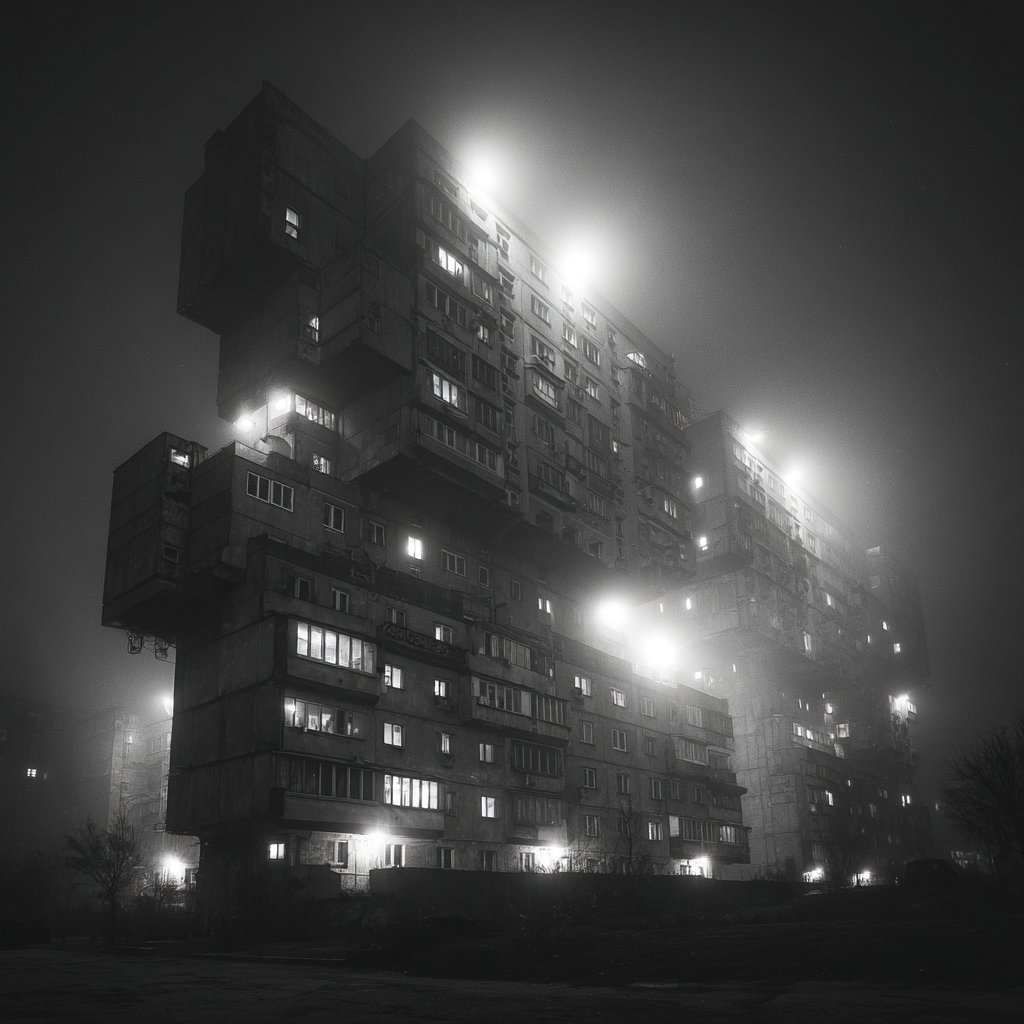
There is a particular feeling produced by certain buildings. Not fear exactly. Not awe. Something closer to the sensation of being watched by something that cannot see.
It happens in stairwells. In long corridors that end in doors you cannot see through. In the shadow of a concrete overhang that blocks the sky completely. In the moment when a housing block at the edge of a city resolves out of fog and you understand, suddenly, how small you are.
Architects have a word for this: the sublime. Edmund Burke defined it in 1757 as the experience of something vast, obscure, and powerful enough to overwhelm the rational mind. He was writing about mountains and storms. He might as well have been writing about the buildings we are discussing here.
Not fear exactly. Something closer to being watched by something that cannot see.
Why Concrete Unsettles
The uncanny — Freud's unheimlich, the unhomely — is the experience of something familiar made strange. A face that looks almost human. A house that looks almost lived in. The feeling that something you recognise has been subtly, wrongly altered.
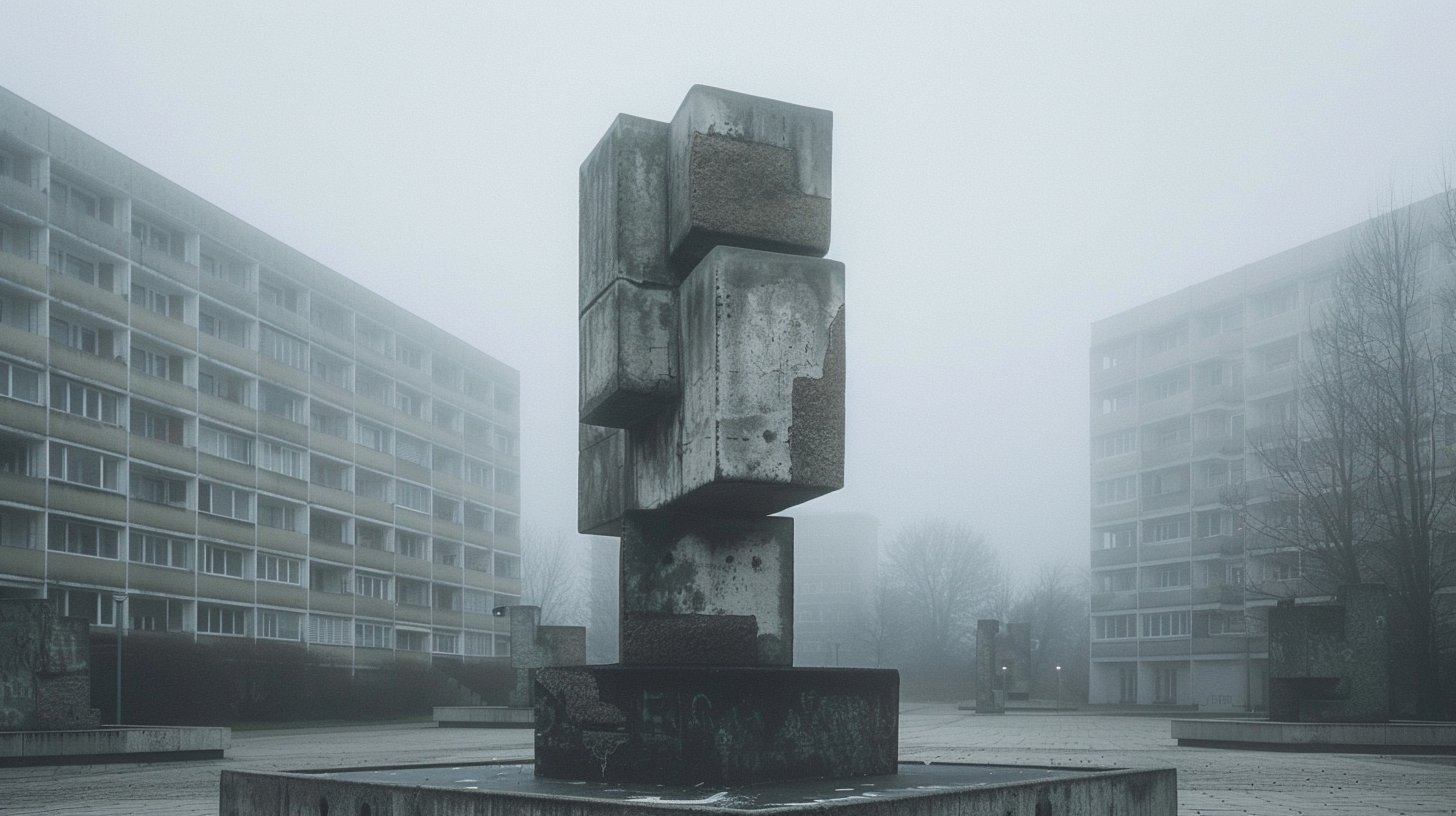
Brutalist buildings produce this effect through scale. They are built at a ratio that dwarfs the human body while referencing human needs — windows, doors, walkways, balconies. The proportions are recognisable. The scale is not. You know what a window is for. You cannot understand why this window is forty feet above your head.
This is not accidental. The architects who designed these buildings were making a statement about the relationship between the individual and the collective. The building was not for you specifically. It was for everyone. That is what makes it feel like it belongs to no one.
The Weight of Systems
There is another kind of haunting that has nothing to do with the supernatural. It is the haunting of history — the sense that a place carries the weight of everything that happened in it, and everything that didn't.
The housing blocks of Eastern Europe carry this weight in a specific way. They were built during a period of genuine ideological conviction — the belief that collective solutions could produce collective dignity. That belief collapsed before the buildings did. The buildings remained, occupied by people whose relationship to the ideology that built them ranged from ambivalence to active hostility.
To live in a building built for a dream you don't share is a particular kind of displacement. The architecture expects you to be a different person than you are. It was designed for a citizen. You are just a resident.
The architecture expects you to be a different person than you are.
Why We Cannot Look Away
The strange thing about buildings that haunt us is that we return to them. We photograph them. We make art about them. We move into them when we can afford to and mourn them when they are demolished.
Part of this is the appeal of scale — the pleasure of feeling small in the presence of something that doesn't care about you. Mountains produce this feeling. So do oceans. So, occasionally, do buildings.
But there is something else. These buildings are honest about power in a way that most buildings are not. They do not pretend the state is benevolent, or that institutions exist to serve you, or that the systems that organise your life were designed with your comfort in mind. They simply say: here is what power looks like when it stops apologising for itself.
That honesty is frightening. It is also, in a way that is difficult to articulate, a relief.
We live surrounded by surfaces designed to reassure us. Glass and steel and the clean lines of buildings that want to be liked. The buildings that haunt us want nothing from us. They were here before we arrived and they will be here after we leave and they have never once adjusted their proportions to make us feel at home.
There is, in that indifference, something almost peaceful.